Spirits History
Illinois once stood as a titan of American distilling, anchored by the industrial might of Peoria. During the 19th century, the Illinois River served as a vital artery for the movement of grain and spirits, fueling a massive distilling complex that included dozens of major operations like Greenhut’s Great Western and Hiram Walker. At its peak, Peoria was a global hub, boasting scores of distilleries that leveraged the region’s strategic location to dominate national markets.
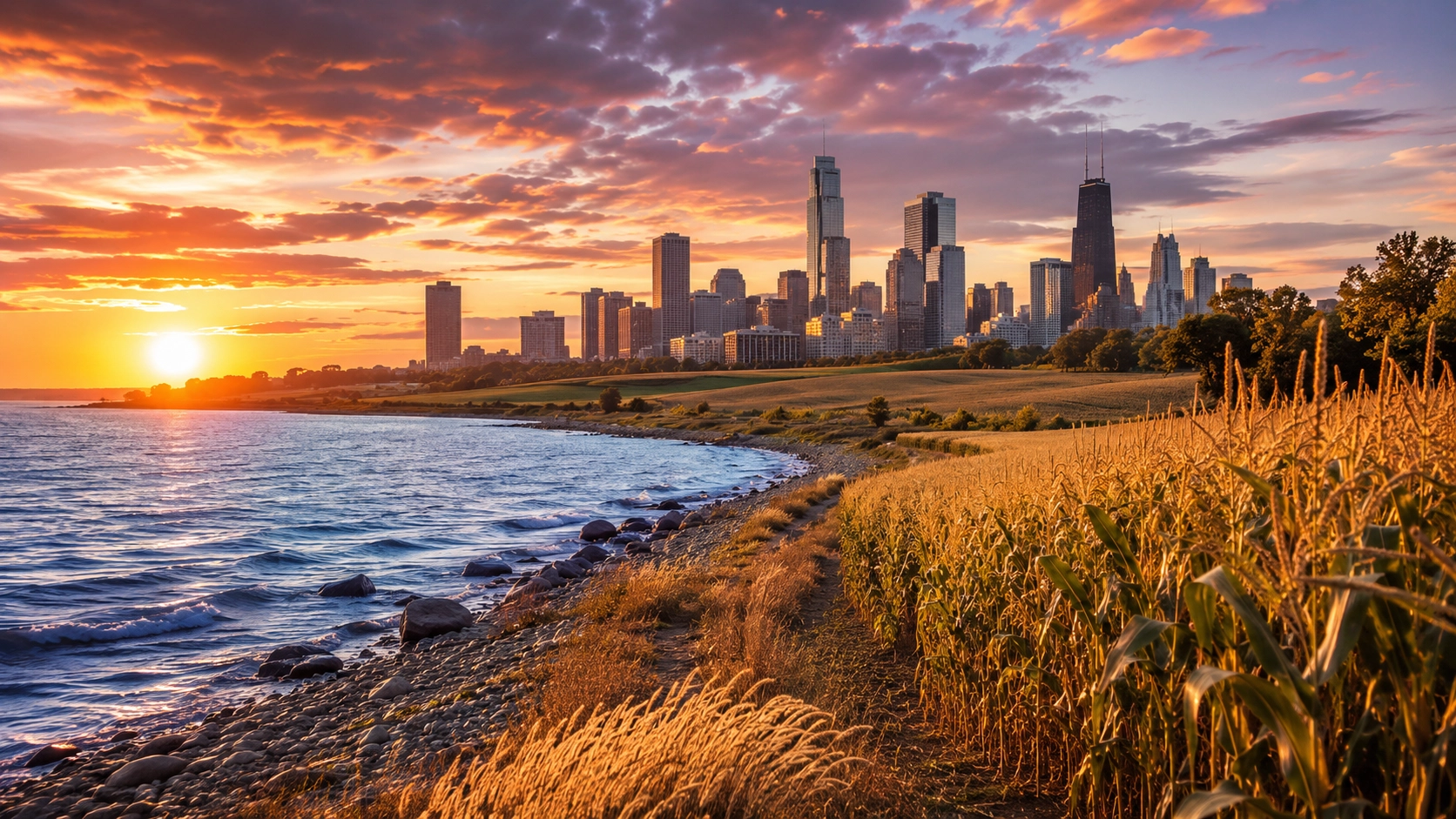
The state’s whiskey identity is inextricably linked to its status as a cornerstone of the American Corn Belt. This agricultural terroir provides a direct, high-quality pipeline of corn, the essential backbone of the local spirit profile. Beyond corn, the fertile Illinois soil supports the rye and wheat necessary for the diverse mash bills seen in modern production. This deep connection to the land is even being refined through academic research at the University of Illinois, where scientists work to develop heirloom corn varieties specifically tailored for distillation.
The onset of Prohibition in 1919 brought a sudden and devastating end to this industrial era, dismantling the massive infrastructure of the Peoria distilling district and leaving the state’s whiskey history in a long period of dormancy. For much of the 20th century, the once-booming industry was a memory, replaced by large-scale grain processing and industrial alcohol production that lacked the craft character of the previous century.
Today, Illinois is experiencing a vibrant craft renaissance, driven by a new generation of “seed-to-spirit” producers. Distilleries such as Whiskey Acres in DeKalb and Koval in Chicago have revitalized the state’s reputation, emphasizing transparency, local sourcing, and artisanal techniques. This revival is not merely a nostalgic nod to the past but a sophisticated movement that integrates modern distilling science with traditional grain-focused philosophies.
The contemporary character of Illinois whiskey is defined by its grain-forward intensity, with a particular emphasis on high-rye mash bills that offer spice and structure. While the state is also home to the culturally notorious botanical liqueur Jeppson’s Malört, the true evolution of the Illinois spirits scene lies in its commitment to its agricultural roots. From the river-driven commerce of the 1800s to the precision of modern craft rye, Illinois has reclaimed its place in the American distilling narrative.